.png)
A Teacher's Voice Should Never Stop at the Front Row
It is 8:20 in the morning. The teacher walks to the middle of the room to explain a diagram, the students at the front nod, and the two students at the back lean forward because they cannot quite hear. This is not a rare problem. It happens in ordinary classrooms, seminar rooms, lecture halls and school auditoriums every day.
Schools do not usually fail because they have no sound system. They fail because the system was designed for one use case, while the school actually has three: a teacher moving around, a group of students talking in turn, and a large hall that needs real power.
The First Sign Is Usually a Quiet Conversation
When schools contact us, the problem is rarely described as "we need a sound system". It is usually described like this:
- "The teacher has to raise her voice all afternoon."
- "Students can set up the projector, but nobody can set up the microphone."
- "When we use the hall for an event, the last row cannot hear the guest speaker."
- "We have three buildings, but we do not want to buy the same thing for every room."
These are practical problems, and they lead to practical solutions. A good school audio package is not one product. It is a small set of products used in the right places.
What Actually Goes into a School Audio Package
For the teacher who walks around the room
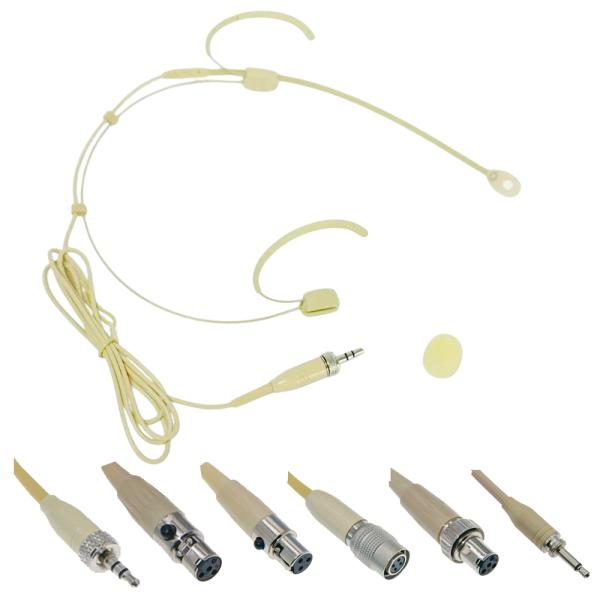
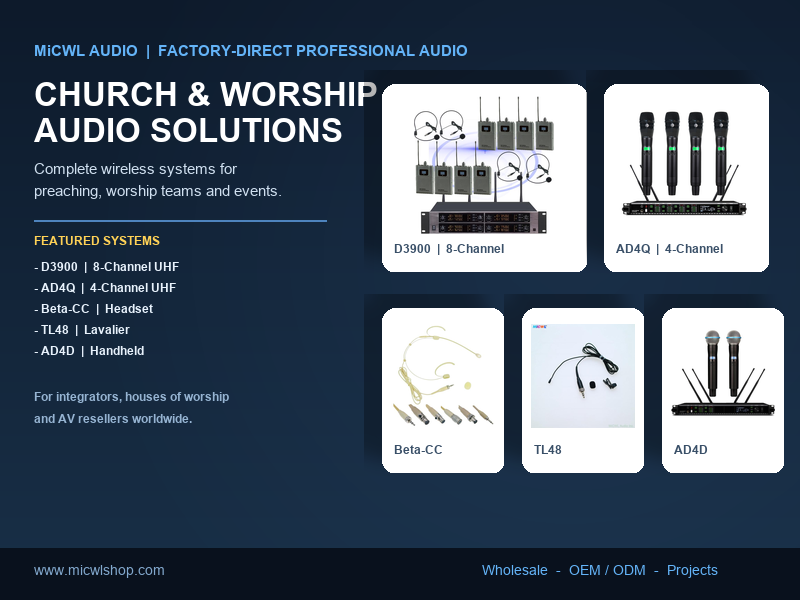
A beige, lightweight headset microphone is the most practical choice. MiCWL Beta-CC sits close to the mouth, stays in place while the teacher moves, and works with common wireless systems from Shure, Sennheiser and AKG, depending on the connector. It is a small investment that removes the most common daily problem: inconsistent voice level.
For group discussion and seminars
A105 is a rechargeable wireless conference system with 16 gooseneck microphones, one chairman unit and 15 delegate units. It gives students and staff a clean table, no cables, and a system that can be moved to another room when needed. The receiver is one 1U unit that fits in a standard rack.
For lecture halls and auditoriums
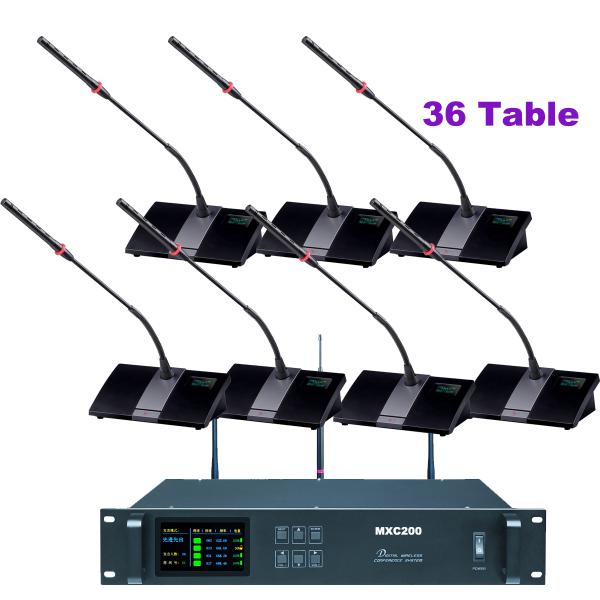
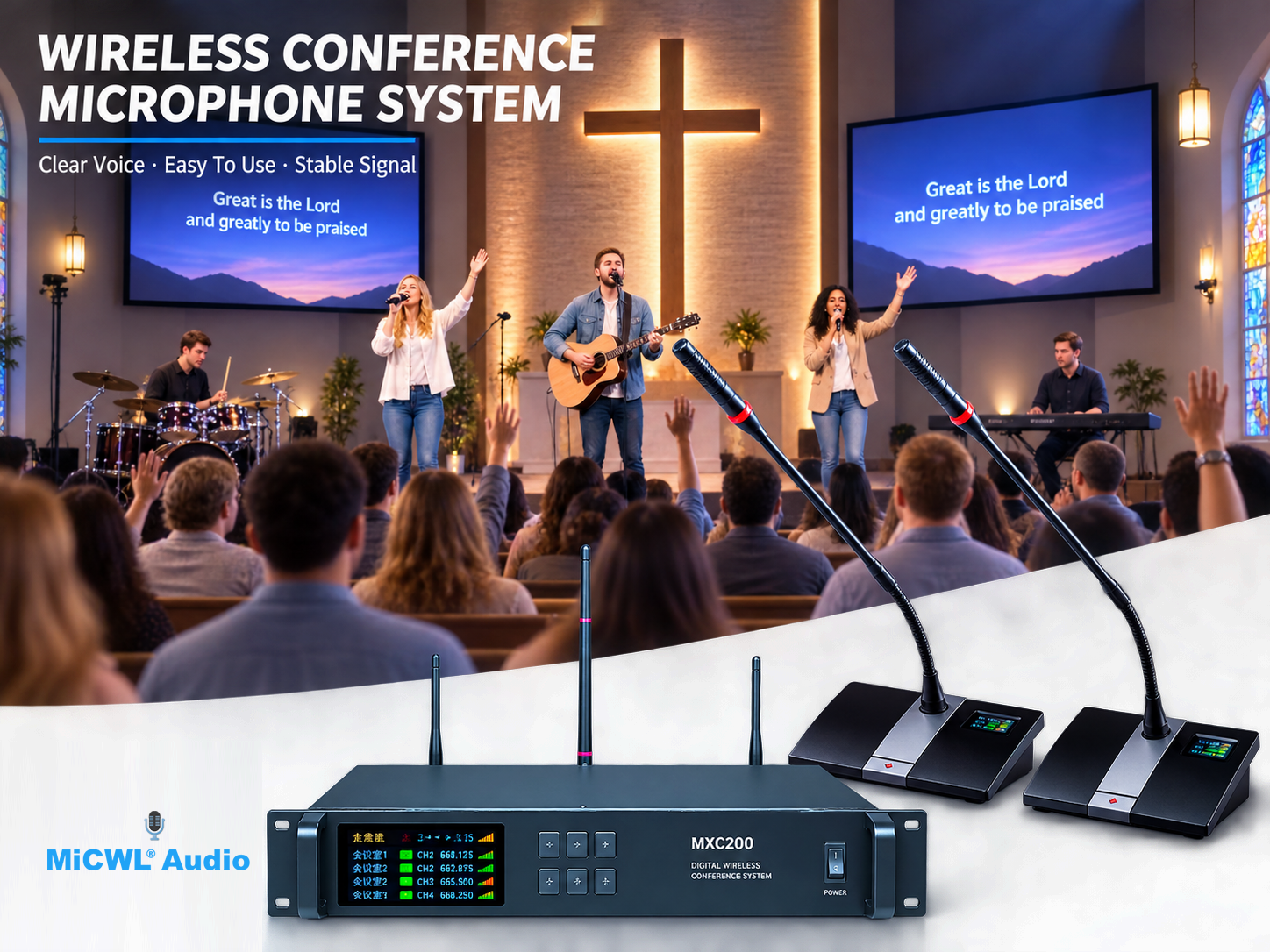
MXC200 is the larger option. The standard kit comes with 20 gooseneck microphones, but the system is designed to expand up to 300 units, which matters for universities, government institutions and schools that add rooms over time.
For the hall to be truly loud enough
A microphone system cannot solve a power problem. In a large hall, the sound must be driven by a professional amplifier. MiCWL FP-7000 is a 2-channel digital amplifier with four selectable power ratings from 2600W to 4800W. It fits into the same rack and provides the headroom that a school hall needs.
Reference prices for planning: MXC200 is $4,400, A105 is $3,780, FP-7000 starts around $199, and Beta-CC starts around $25.99. Bulk and distributor pricing is available.
One Room or Many Rooms?
The mistake schools make most often is giving every classroom the same package. That usually means spending too much money on rooms that only need a teacher microphone.
A practical approach is different:
- Buy two or three A105 systems that can be moved between standard classrooms and seminar rooms.
- Install a fixed MXC200 system only in rooms that are used for regular meetings or large classes.
- Give individual headset microphones to teachers who lecture every day.
- Use one FP-7000 in the auditorium, not in every small room.
This approach gives the school flexibility without treating every classroom like a conference hall.
Choosing A105 or MXC200: A Real Decision, Not a Formula
The choice should be based on how the room will be used, not on which product is more impressive.
If the school has 10 to 20 people in a discussion and wants the system to be portable, A105 is the right answer. It is rechargeable, compact, and easy to use.
If the school has a fixed hall that will host 20 people today and 100 people in two years, MXC200 is worth the investment because it can grow with the institution.
If the school already has an amplifier and only needs to solve the teacher's voice problem, start with Beta-CC. It is the lowest cost improvement and can be used immediately.
What Schools Should Ask Before Buying
The most useful questions are about the real daily routine, not about technical specifications:
- How many people usually speak during a class or meeting?
- Does the teacher move around the room?
- Will the equipment stay in one building or move between rooms?
- Does the hall already have speakers, or does it need an amplifier too?
- Who will be responsible for setting up the equipment?
These questions determine whether the school needs one system, two systems, or a permanent installation.
What Schools Ask Us Most
Does a classroom only need a teacher microphone?
No. A teacher microphone is the foundation. Group discussions, open classes and large events still need a conference system or hall reinforcement.
Can A105 be used in a university classroom?
Yes. It is especially useful for seminars, student councils and medium-sized lecture rooms because it is rechargeable and cable-free.
Does every room need its own amplifier?
No. A single professional amplifier is normally enough for the auditorium. Small rooms usually work through a different setup.
Can a school share equipment between buildings?
Yes. A105 is designed for rotation between rooms, which makes shared use practical and cost effective.
How to Get a Useful Quote
To give you a sensible configuration, we only need a few details: the number of classrooms, whether there is an auditorium, how many people speak in the largest room, and whether the school needs branding or bulk wholesale pricing. With that information, we can recommend a package that matches the budget rather than the biggest box.